Bone Grafting
Rebuilds jawbone strength to support successful dental implants.
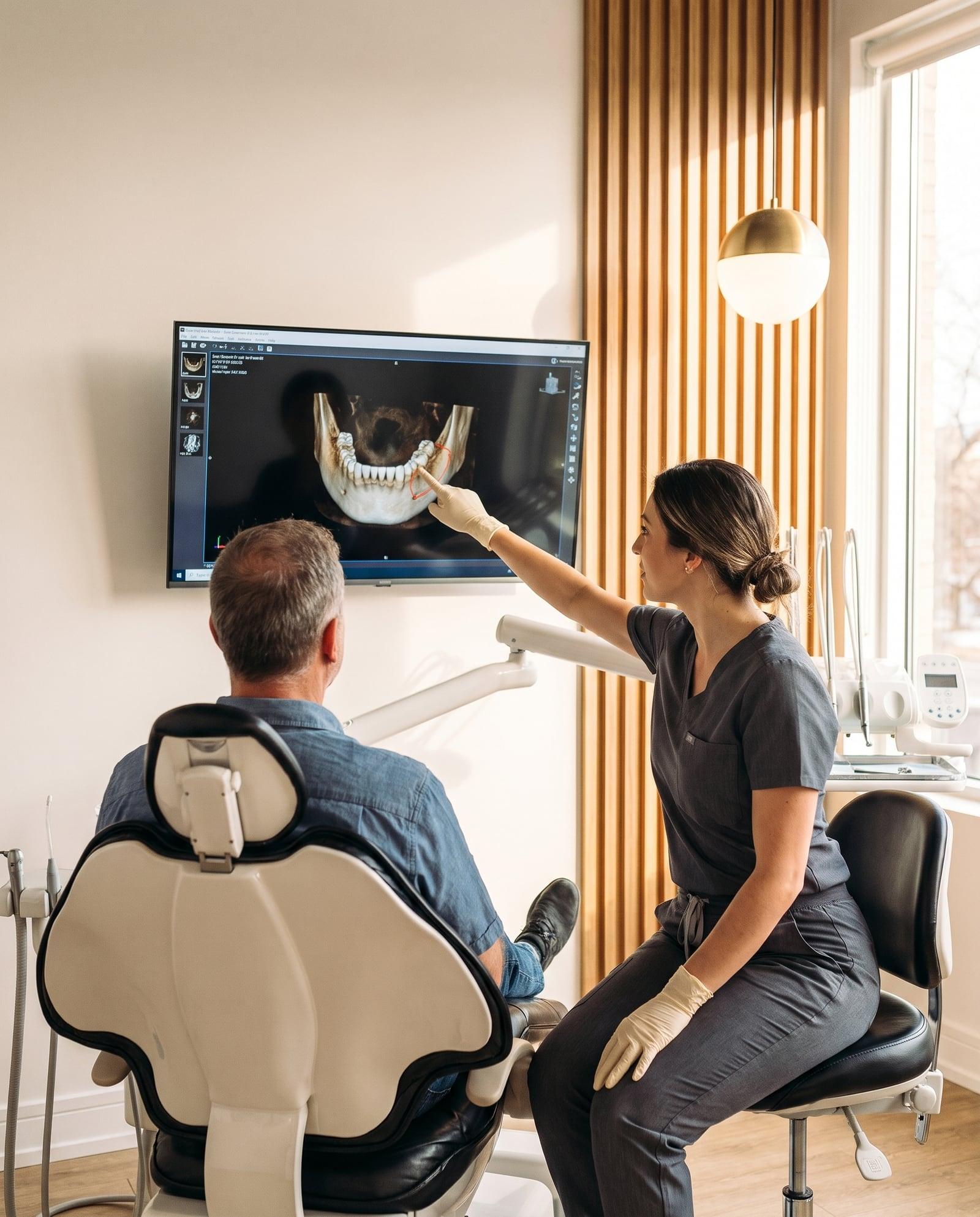
What to know
Bone Grafting, explained.
What it is, how it works and how it helps, in plain words.
A bone graft adds bone or bone-like material to areas of the jaw where bone has thinned or been lost. This often happens after a tooth extraction, from gum disease, or when a tooth has been missing for some time.
The graft material, which may be processed donor bone, animal-derived bone, a synthetic material, or occasionally your own bone, is placed where bone is needed and often covered with a protective membrane. Over several months, your body gradually replaces the graft with new bone of its own, creating a stable base for an implant.
Implants need enough healthy bone around them to stay secure over time. Grafting can make implants possible for patients who were told they didn't have enough bone, and grafting at the time of an extraction helps preserve the shape of the jaw.
FAQ
Questions, answered.
Common questions about bone grafting.
It's done with local anesthetic, and sedation is available if you'd like it. Most patients have mild to moderate soreness and swelling for a few days, usually managed with over-the-counter pain relievers.
Common options include processed donor bone, animal-derived bone, and synthetic materials, all carefully sterilized and screened. Your dentist will explain which material is recommended for you and why.
It depends on the size and type of graft. Small grafts placed at the time of an extraction may be ready in a few months, while larger grafts can need more time, and your dentist will confirm readiness with imaging.
Bone Grafting near you.
Book bone grafting at the office closest to you.

Your next visit
Your next smile starts here.
Book online in a minute, or call the office closest to you. New patients are welcome at all three locations.