Dental Bridges
Replaces missing teeth seamlessly for a complete, functional smile.
What to know
Dental Bridges, explained.
What it is, how it works and how it helps, in plain words.
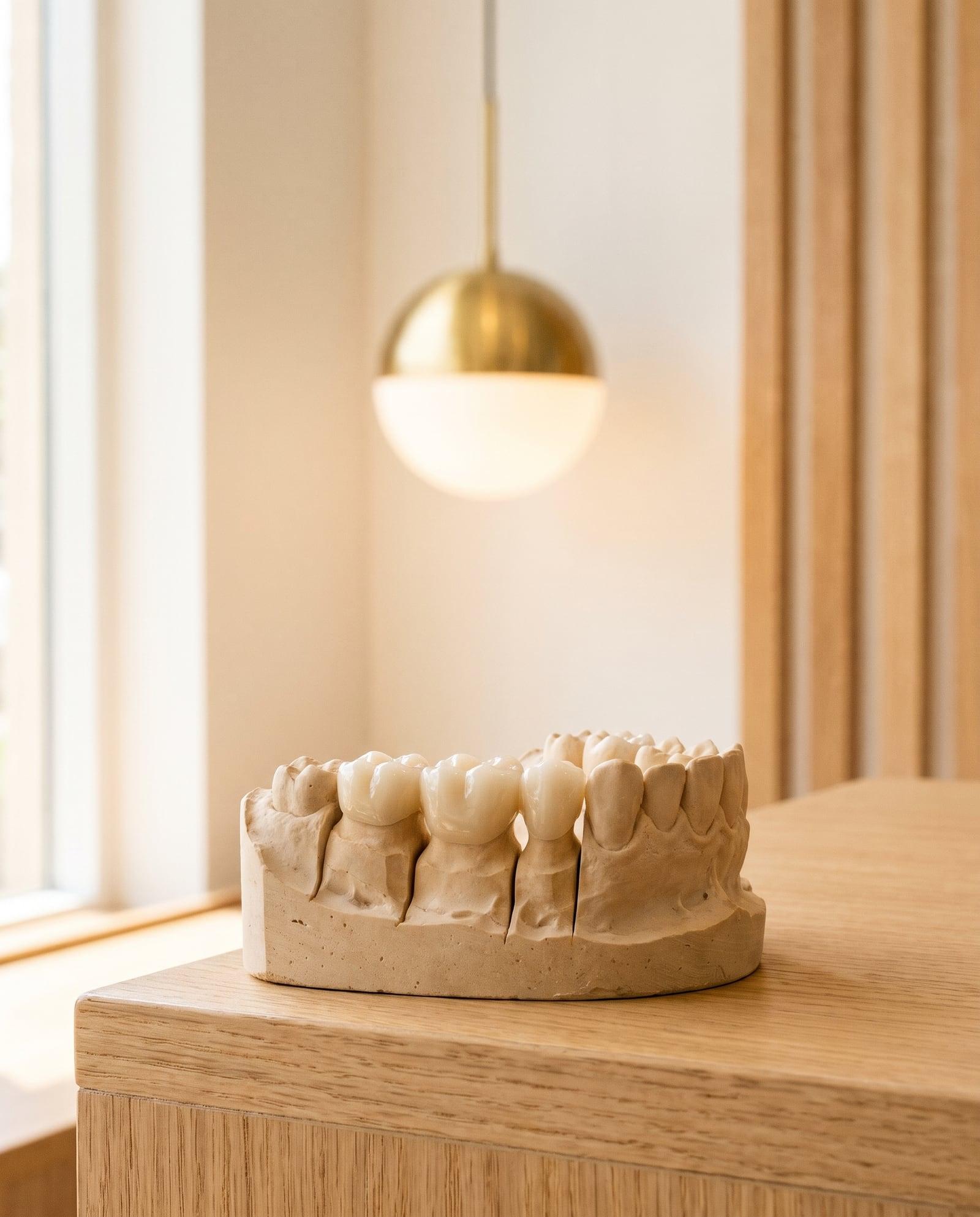
A dental bridge replaces one or more missing teeth by spanning the gap with a false tooth anchored to the teeth on either side. The anchoring teeth are covered with crowns, and the bridge is fixed in place rather than removable.
The teeth next to the gap are reshaped to hold crowns, and impressions or a digital scan are taken for the lab. You'll wear a temporary bridge while your custom bridge is made, and at your next visit it's checked for fit and color and cemented in place.
Filling the gap keeps neighboring teeth from drifting or tipping into the empty space, which can throw off your bite. A bridge restores your ability to chew and speak clearly and fills out your smile.
FAQ
Questions, answered.
Common questions about dental bridges.
Both are good options. An implant replaces the tooth without involving the neighboring teeth, while a bridge avoids surgery and can make sense when the adjacent teeth already need crowns, so your dentist will help you weigh bone health, cost, and timeline.
With good care, many bridges last 10 years or more. Daily cleaning under the bridge and regular checkups protect the supporting teeth, which are key to how long the bridge lasts.
Use a floss threader, special bridge floss, or a water flosser to clean under the false tooth and around the supporting crowns each day. Your hygienist can show you the technique that works best.
Dental Bridges near you.
Book dental bridges at the office closest to you.

Your next visit
Your next smile starts here.
Book online in a minute, or call the office closest to you. New patients are welcome at all three locations.