Digital X-rays
Instant, low-radiation imaging for accurate, efficient dental care.
What to know
Digital X-rays, explained.
What it is, how it works and how it helps, in plain words.
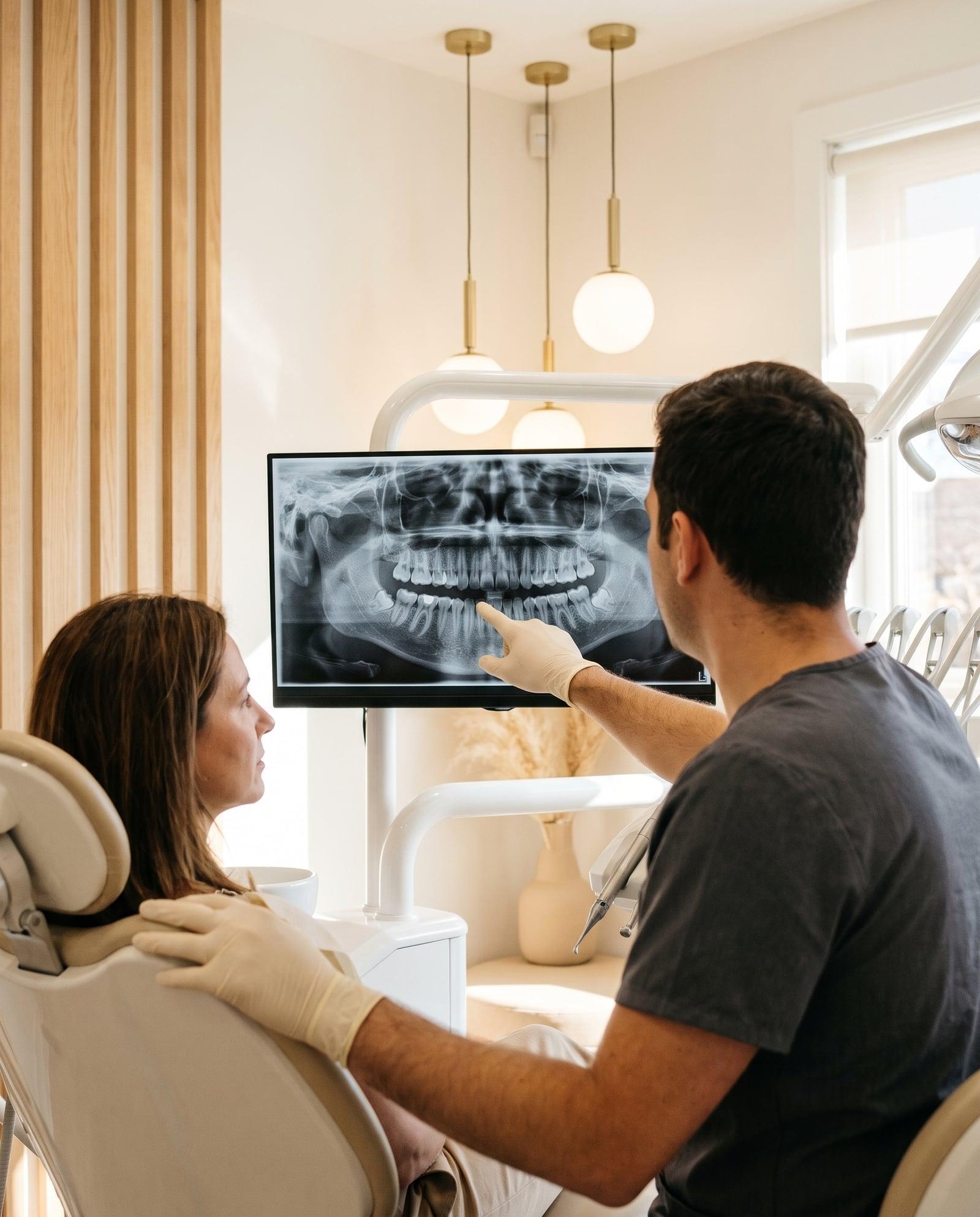
Digital X-rays use an electronic sensor instead of photographic film to capture images of your teeth and the bone around them. The images appear on a computer screen within seconds, ready for your dentist to review with you.
A small sensor is placed in your mouth and a brief, low-dose exposure creates the image. Your dentist can zoom in, adjust contrast, and compare it side by side with earlier images to spot changes over time.
X-rays reveal what an exam alone can't see, including decay between teeth, bone loss from gum disease, infection at the tip of a root, and teeth that haven't come in yet. Digital imaging uses less radiation than traditional film and makes it easy for you to see exactly what your dentist sees.
FAQ
Questions, answered.
Common questions about digital x-rays.
The dose from digital dental X-rays is very low, often compared to the natural background radiation you're exposed to in everyday life. Your dentist only takes the images needed for your care.
Let the team know if you're pregnant or think you might be. Dental X-rays use a very low dose, and your dentist will only take images that are necessary, often postponing routine ones until after delivery.
It depends on your age, your oral health, and your risk for decay or gum disease. Some patients benefit from bitewing X-rays once a year, while others can go longer between images.
Digital X-rays near you.
Book digital x-rays at the office closest to you.

Your next visit
Your next smile starts here.
Book online in a minute, or call the office closest to you. New patients are welcome at all three locations.