Gum Grafting
Repairs receding gums for healthier coverage and better-protected teeth.
What to know
Gum Grafting, explained.
What it is, how it works and how it helps, in plain words.
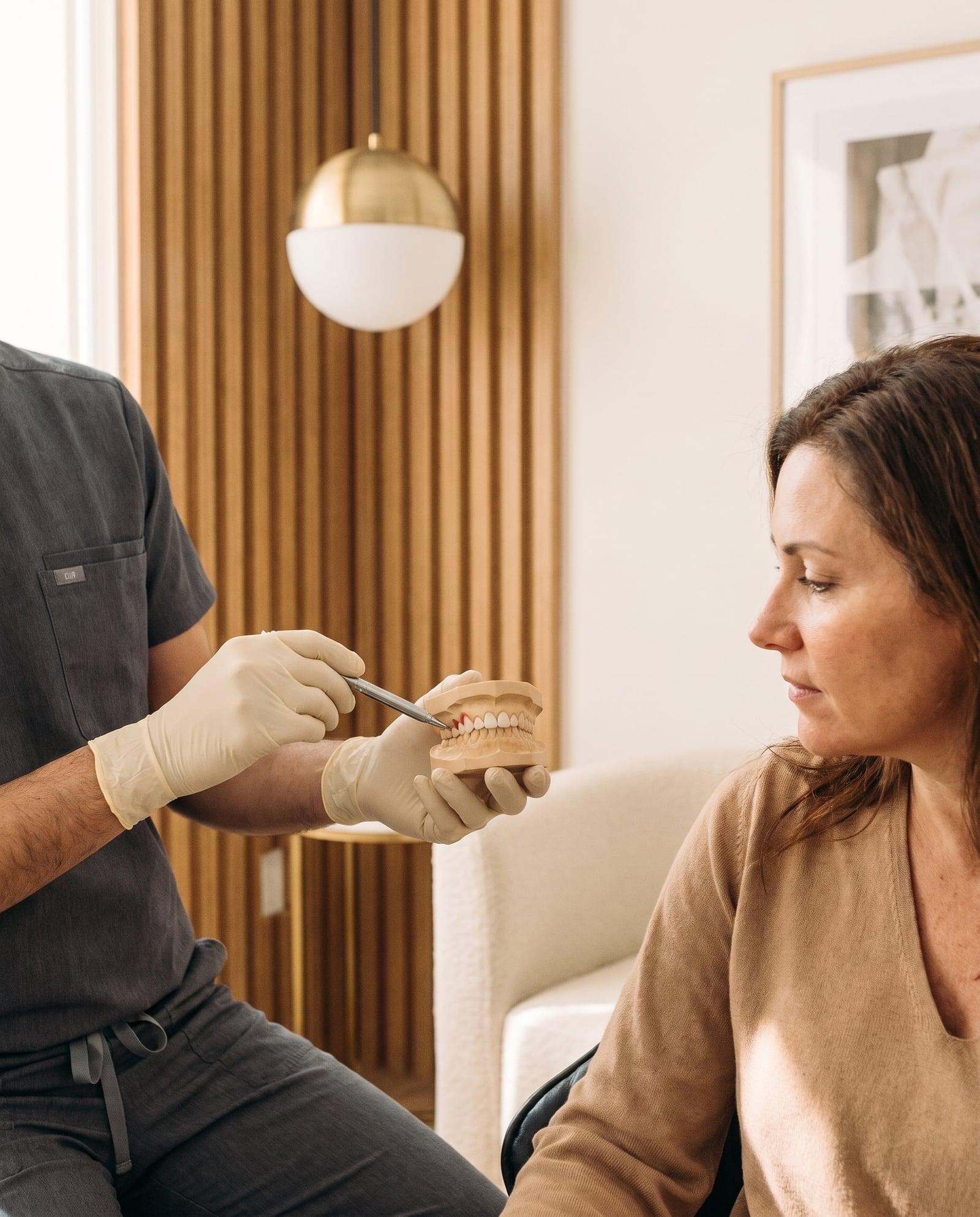
A gum graft repairs areas where the gums have receded and exposed the roots of your teeth. Tissue is added to the area to cover the root and thicken the gum.
Your dentist places graft tissue, taken from the roof of your mouth or from a donor source, at the site of recession and secures it with fine stitches. Over the following weeks, the graft heals and blends with the surrounding gum.
Covering exposed roots reduces sensitivity to hot and cold, protects the roots from decay, and helps prevent further recession and bone loss. It can also improve the look of teeth that appear too long.
FAQ
Questions, answered.
Common questions about gum grafting.
Common causes include gum disease, brushing too hard, grinding or clenching, genetics, naturally thin gum tissue, and tobacco use. Your dentist will look for the cause so it can be addressed alongside treatment.
Most people have some soreness and swelling for a few days and eat soft, cool foods for a week or two. If tissue was taken from the palate, that spot may be the more tender of the two.
No. Receded gum tissue doesn't regenerate by itself, so a graft is the way to restore lost coverage. Catching recession early and changing the habits that contribute to it can keep it from getting worse.
Gum Grafting near you.
Book gum grafting at the office closest to you.

Your next visit
Your next smile starts here.
Book online in a minute, or call the office closest to you. New patients are welcome at all three locations.