Orthodontic Evaluations
Early checks that help plan for your child's future orthodontic needs.
What to know
Orthodontic Evaluations, explained.
What it is, how it works and how it helps, in plain words.
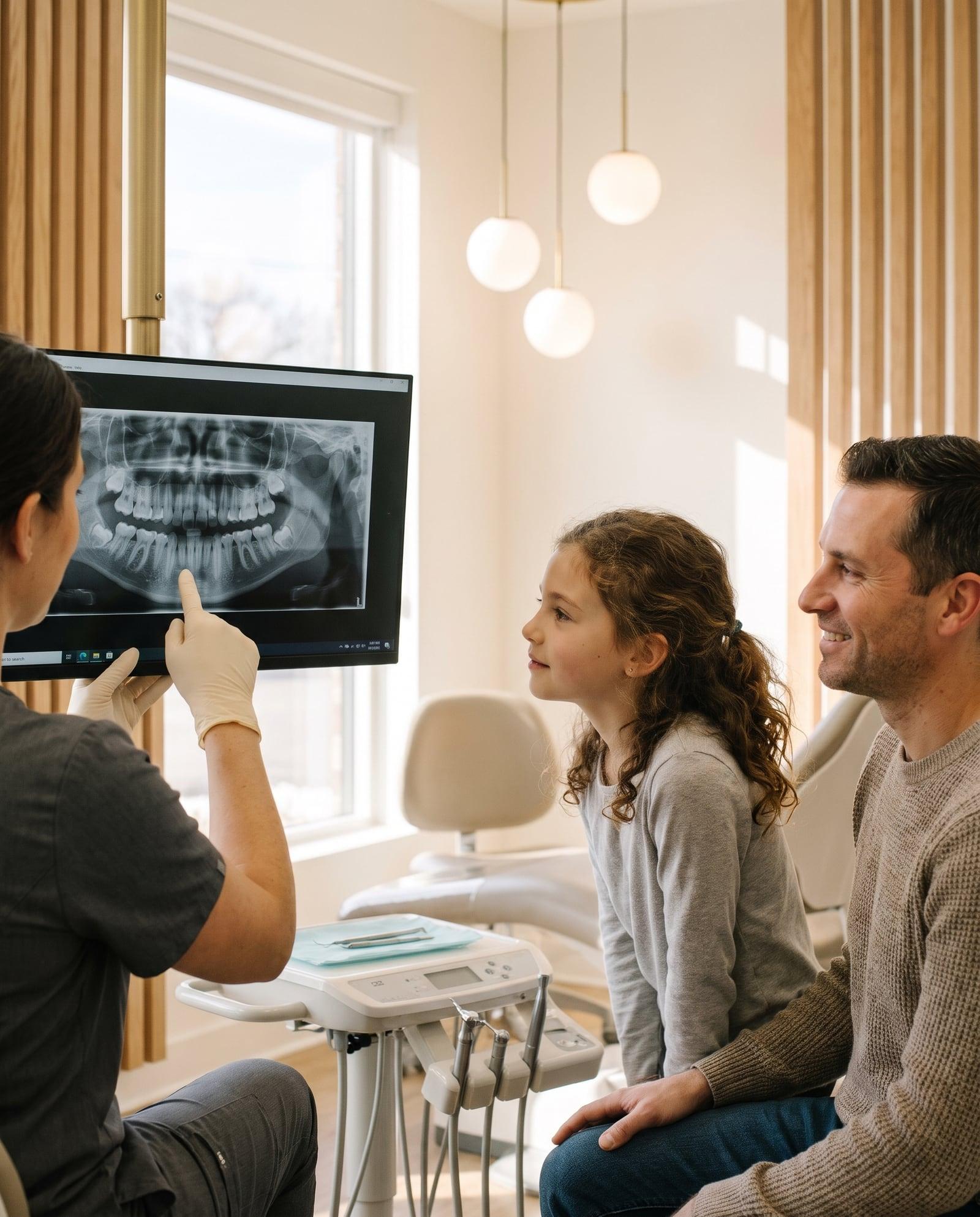
An orthodontic evaluation checks how your child's teeth, bite, and jaws are developing. A first evaluation is commonly recommended around age 7, when the mix of baby and permanent teeth makes many developing problems visible.
The dentist examines your child's bite, the spacing of the teeth, and the growth of the jaws, often with X-rays or photos. You'll learn whether treatment is needed now, later, or not at all, and if monitoring is best, your child will be rechecked at future visits.
Some problems, like crossbites, severe crowding, or jaw growth issues, are easier to address while a child is still growing. An early evaluation doesn't mean early braces; it means you'll know what to watch for and when treatment, if any, would work best.
FAQ
Questions, answered.
Common questions about orthodontic evaluations.
Most children don't need treatment at that age. The evaluation is about spotting issues early, and often the recommendation is simply to monitor growth until more permanent teeth come in.
Early or late loss of baby teeth, difficulty chewing, mouth breathing, a thumb-sucking habit that continues as permanent teeth arrive, crowded or protruding teeth, and teeth that don't meet properly are all worth checking.
Phase one is limited early treatment, such as an expander, to guide jaw growth or make room for incoming teeth. Phase two typically happens once most permanent teeth are in and fine-tunes their alignment, often with braces or aligners.
Orthodontic Evaluations near you.
Book orthodontic evaluations at the office closest to you.
Your next visit
Your next smile starts here.
Book online in a minute, or call the office closest to you. New patients are welcome at all three locations.