Wisdom Teeth Removal
Prevent pain, crowding, and infection with expert wisdom tooth extractions.
What to know
Wisdom Teeth Removal, explained.
What it is, how it works and how it helps, in plain words.
Wisdom teeth are the third molars, which usually come in during the late teens or early twenties. Many people don't have enough room for them, so they become impacted, only partly erupt, or come in at an angle.
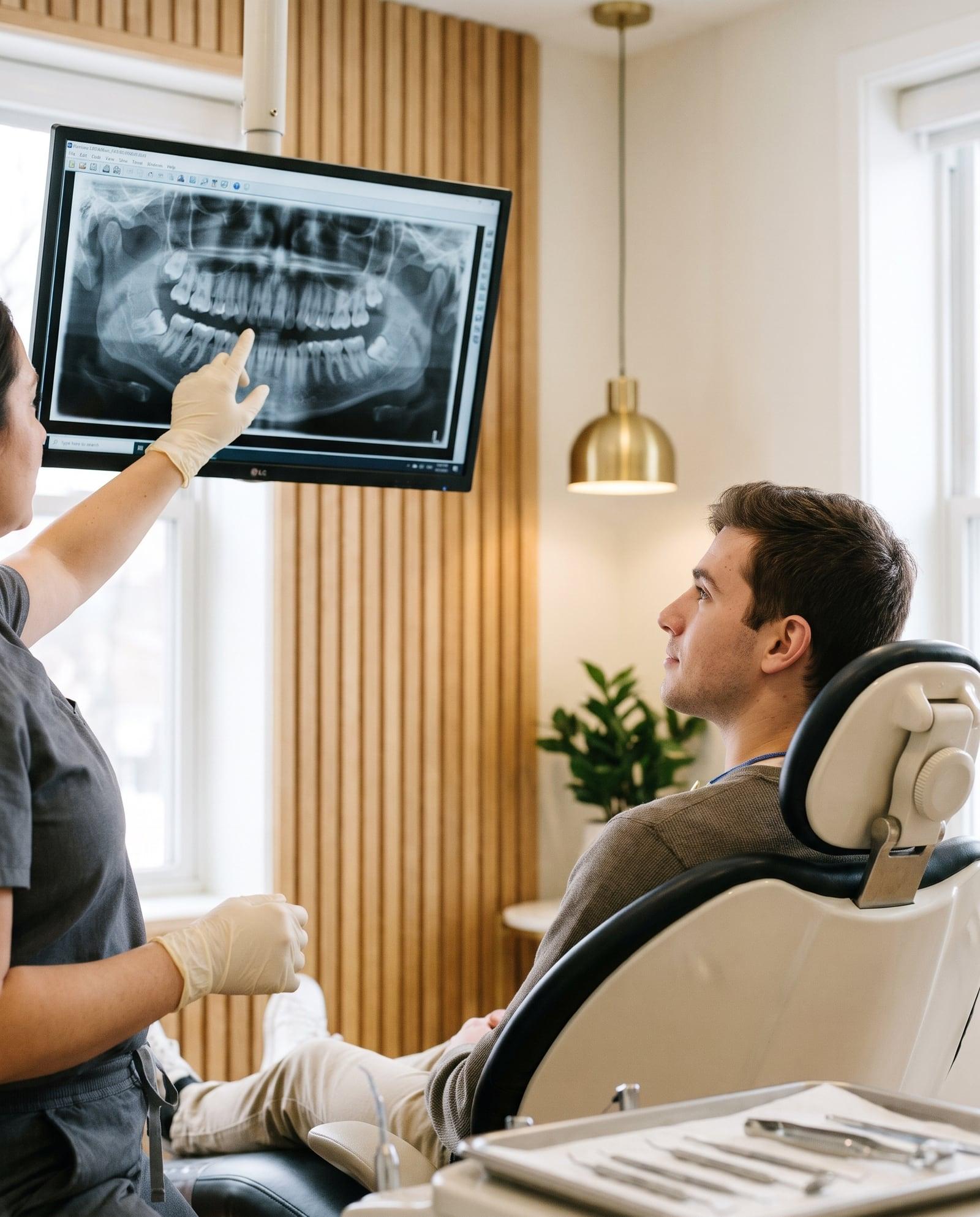
Your dentist evaluates the position of your wisdom teeth with X-rays or 3D imaging. The teeth are removed under local anesthetic, often with sedation for comfort, and teeth that haven't fully come in may be removed in sections through a small opening in the gum.
Removing problematic wisdom teeth helps prevent painful infections, cysts, and damage to the neighboring molars. Many dentists recommend an evaluation in the teen years, when roots are less developed and recovery tends to be easier.
FAQ
Questions, answered.
Common questions about wisdom teeth removal.
No. Wisdom teeth that are healthy, fully erupted, well positioned, and easy to clean can sometimes stay. Your dentist will monitor them and recommend removal only if they're causing or likely to cause problems.
Most people have some swelling and soreness for a few days and stick to soft foods during that time. Following your aftercare instructions, like avoiding straws and smoking, helps prevent a dry socket.
A dry socket happens when the blood clot in the extraction site is lost too early, exposing the bone and causing throbbing pain a few days after surgery. If your pain gets worse instead of better, call the office so it can be treated.
Wisdom Teeth Removal near you.
Book wisdom teeth removal at the office closest to you.

Your next visit
Your next smile starts here.
Book online in a minute, or call the office closest to you. New patients are welcome at all three locations.